
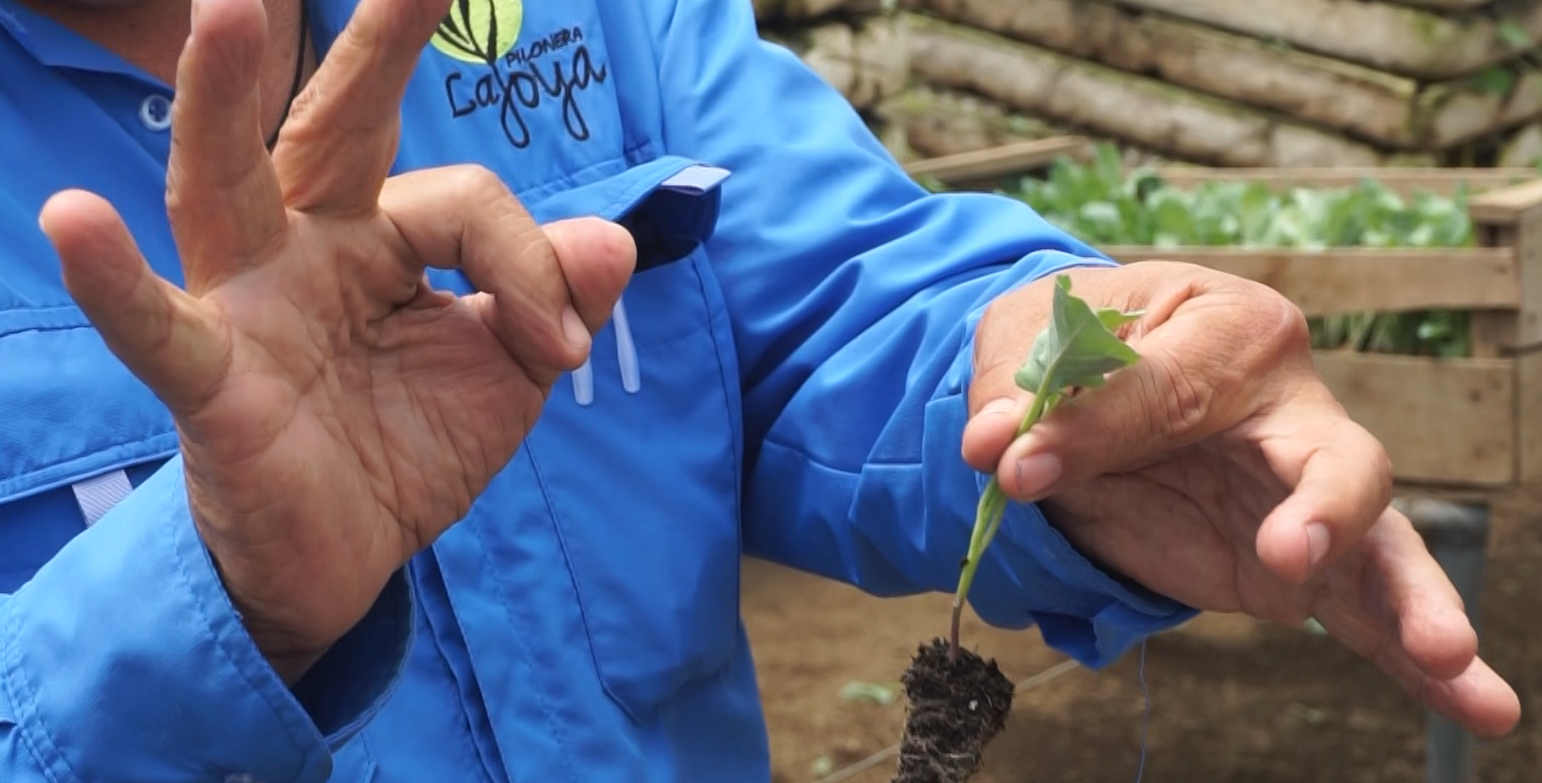
PROTEO INTERNATIONAL S.r.l. recognizes the critical importance of seedling quality, especially during the transplant phase, when environmental stresses can significantly affect plant development. Recently, a Guatemalan client demonstrated three key tests that help determine whether a seedling is of superior quality, ensuring it can withstand the challenges of transplanting.
The first test, known as the “dancer” test, involves a simple yet effective assessment. The technician holds the seedling between the thumb and index finger, rolling it along its axis. A high-quality seedling should rotate smoothly and maintain its integrity, without breaking or bending. This movement mimics the stresses seedlings face during handling and transportation, making it a crucial indicator of the plant’s ability to endure physical stress.
The second test, called the “loop” test, requires the technician to wrap the seedling around its finger. This test evaluates the seedling’s flexibility and strength. A quality seedling will not break under the pressure of being twisted around the finger. Instead, it should maintain its structure and demonstrate resilience, ensuring that it will not easily succumb to the mechanical stresses during transplanting and the early stages of growth.
The final test, known as the “scorn” test, involves dropping the seedling onto the ground to assess its ability to recover from sudden impacts. While this test may seem harsh, it is an effective way to gauge the seedling’s resilience. If the seedling remains intact and healthy after being dropped, it has passed the test, demonstrating its ability to endure environmental stressors.
Each of these tests evaluates a different aspect of the seedling’s quality. Seedlings that pass these tests are more likely to survive the stresses of transplanting, including changes in soil conditions, water availability, and exposure to pests and diseases.
The result can be achieved using a proper plan of fertilization including both macro, meso and microelements of the PROTEO line during the nursery stage.